Ultra-processed food is everywhere at the moment. It's in the headlines, it's all over social media, and it's probably in your fridge right now. But ask ten people what it actually means and you'll get ten different answers.
Here's the simple version. Ultra-processed foods are made in factories from ingredients you wouldn't find in a normal kitchen. Think emulsifiers, preservatives, flavourings, sweeteners and refined oils. If the ingredients list reads more like a chemistry set than a recipe, there's a good chance it's ultra-processed.
In this guide we'll cover what makes a food ultra-processed, give you a simple list of the most common ones, and show you the ingredients to look out for so you can spot them in seconds.
What makes a food ultra-processed?
Nearly all food is processed in some way. Washing and bagging salad is processing. So is freezing peas, pasteurising milk or baking bread. None of that is a problem.
Ultra-processed food is different. It's made mostly from refined ingredients and additives that you'd never use at home. The point of those extras usually isn't nutrition. It's to make the food cheaper to produce, last longer on the shelf, taste more moreish, or look and feel a certain way.
The giveaways tend to be the same few things:
- Emulsifiers to bind ingredients together and give a smooth, consistent texture.
- Preservatives to stop mould and bacteria so the food lasts for weeks or months.
- Flavourings and flavour enhancers to make up for flavour that's been lost in processing.
- Sweeteners to make things taste sweet without the sugar on the label.
- Refined seed oils like rapeseed, sunflower and soybean oil, plus palm oil.
- Colourings to make food look brighter or more appealing.
- Modified starches, protein isolates and syrups that are made from food but have been broken down so far they no longer look like it.
A useful rule of thumb: if a product has more than five or so ingredients, and some of them are words you'd struggle to pronounce, you're probably holding something ultra-processed.
A simple list of ultra-processed foods
These are the foods that are almost always ultra-processed when you buy them from a supermarket. Most people won't be surprised by this list, but it's a useful starting point.
| Food | What usually gives it away |
|---|---|
| Fizzy drinks and energy drinks | Sweeteners, flavourings, colourings, preservatives |
| Crisps and flavoured snacks | Flavour enhancers, flavourings, seed oils |
| Sweets, chocolate bars and biscuits | Emulsifiers, glucose syrup, flavourings, palm oil |
| Sugary breakfast cereals | Glucose syrup, flavourings, emulsifiers |
| Ready meals and microwave meals | Modified starch, flavourings, stabilisers, seed oils |
| Sausages, ham and processed meats | Preservatives (nitrites), dextrose, stabilisers |
| Chicken nuggets and breaded fish | Modified starch, raising agents, seed oils |
| Instant noodles and pot snacks | Flavour enhancers, palm oil, flavourings |
| Shop-bought cakes and pastries | Emulsifiers, preservatives, glucose syrup |
| Ice cream and dessert pots | Emulsifiers, stabilisers, flavourings |
| Margarine and spreads | Emulsifiers, flavourings, blended seed oils |
| Packaged sliced bread | Emulsifiers, preservatives, added oils |
Foods you might not realise are ultra-processed
This is where it gets interesting. Plenty of foods sold as healthy, natural or "better for you" are ultra-processed too. They just don't look like junk food.
- Flavoured and low-fat yoghurts. Many contain sweeteners, flavourings and thickeners like modified starch to make up for the fat that's been taken out.
- Plant milks. A lot of oat, almond and soya drinks contain added oils, emulsifiers and gums to make them creamy and stop them separating.
- Protein bars and cereal bars. These often rely on protein isolates, syrups, sweeteners and emulsifiers.
- Meat-free burgers and sausages. Most are built from protein isolates, oils, binders and flavourings.
- Wraps and tortillas. Shop-bought wraps usually contain preservatives, emulsifiers and raising agents so they stay soft for weeks.
- Hummus and dips. Some are simple, but many swap olive oil for rapeseed oil and add preservatives.
- Diet and "zero sugar" products. Taking the sugar out usually means adding sweeteners and flavourings back in.
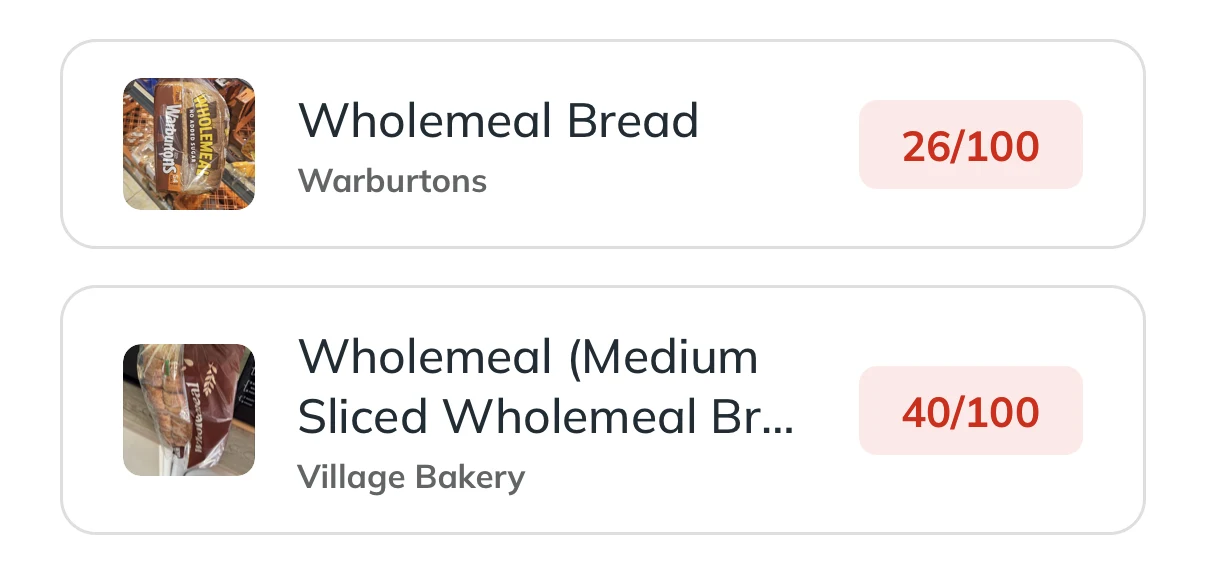
- Wholemeal bread. Most sliced wholemeal loaves contain emulsifiers, preservatives and added oils. We dug into this in detail in our article Is wholemeal bread ultra-processed?
None of this means you have to give these foods up. It just means the word "healthy" on the front of the pack isn't the full picture. The ingredients list on the back is.
Ingredients to look out for on the label
You don't need to memorise every E number. Most ultra-processed foods share the same handful of ingredients, and once you know them you'll start spotting them everywhere.
| Type | Common examples | Why they're added |
|---|---|---|
| Emulsifiers | Mono- and diglycerides of fatty acids (E471), E472e, carrageenan (E407) | Smooth texture, stop ingredients separating |
| Preservatives | Calcium propionate (E282), potassium sorbate (E202), sodium benzoate (E211), sodium nitrite (E250) | Longer shelf life |
| Sweeteners | Aspartame (E951), sucralose (E955), acesulfame K (E950) | Sweetness without sugar on the label |
| Flavour enhancers | Monosodium glutamate (E621) | Stronger, more savoury taste |
| Colourings | Caramel colour (E150d) | Makes food look darker or brighter |
| Thickeners and stabilisers | Xanthan gum (E415), modified starch | Thicker, more stable texture |
| Refined oils | Rapeseed, sunflower, soybean and palm oil | Cheap fat, softer texture, longer shelf life |
| Processed sugars and starches | Glucose-fructose syrup, maltodextrin, dextrose | Cheap sweetness and bulk |
| Protein isolates | Soya protein isolate, pea protein isolate | Adds protein and structure to processed products |
The word "flavouring" is worth watching too. It can cover a whole mix of substances, and the label doesn't have to tell you what's in it.
Why it matters
Ultra-processed food isn't a small part of the British diet. It's most of it. Research using the government's National Diet and Nutrition Survey found that ultra-processed foods made up around 57% of the calories in the average UK diet. For teenagers it's even higher, at around two thirds of everything they eat.
That matters because of what tends to come with it. The same research found that people eating the most ultra-processed food also ate more sugar and salt, and less fibre and protein.
In 2024, a major review published in the BMJ pulled together studies covering almost 10 million people. It linked diets high in ultra-processed food to 32 different health problems, including heart disease, type 2 diabetes, anxiety and depression.
It's fair to say these studies show a link rather than proof that ultra-processed food is the direct cause. Scientists are still working out exactly why the link exists. But the pattern is consistent enough that many people would rather not wait for the final answer before cutting down.
Easy swaps to cut down
You don't have to overhaul everything at once. Swapping a few everyday staples makes a real difference, because they're the things you eat most often.
| Instead of | Try |
|---|---|
| Sliced supermarket bread | Real sourdough made with just flour, water and salt |
| Flavoured yoghurt | Plain Greek or natural yoghurt with fresh fruit and honey |
| Sugary cereal | Porridge oats with fruit and nuts |
| Crisps | Salted nuts, or popcorn you pop yourself |
| Ready meals | Simple batch cooking you can freeze in portions |
| Margarine | Butter |
| Fizzy drinks | Sparkling water with a squeeze of lemon or lime |
| Processed ham | Leftover roast chicken or beef |
| Shop-bought dressings | Olive oil, vinegar or lemon juice, salt and pepper |
The goal isn't to be perfect. It's to know what you're eating, so you can make choices on purpose instead of by accident.
Frequently asked questions
What is the difference between processed and ultra-processed food?
Processed food is real food that's been changed in a simple way, like cheese, tinned fish or fresh bread from a bakery. Ultra-processed food is made mostly from refined ingredients and additives, like emulsifiers, preservatives and flavourings, that you wouldn't use at home.
Are all E numbers bad?
No. Some E numbers are simple things like vitamin C (E300) or calcium carbonate (E170). The issue is less about any single E number and more about what a long list of them tells you about how the food was made.
Is frozen food ultra-processed?
Not necessarily. Frozen peas, berries, spinach and plain fish fillets are just frozen food. Frozen pizzas, breaded chicken and ready meals usually are ultra-processed.
Is cheese ultra-processed?
Most traditional cheese isn't. A block of cheddar is usually just milk, salt, cultures and rennet. Cheese strings, spreadable cheese and processed cheese slices are a different story, and often contain emulsifying salts and other additives.
Are oats ultra-processed?
Plain porridge oats aren't. Flavoured instant oat pots and many granolas and cereal bars are, because of the added syrups, flavourings and oils.
How can I tell if a food is ultra-processed?
Read the ingredients list. If it's long and contains things you wouldn't cook with at home, such as emulsifiers, preservatives, sweeteners, flavourings or refined oils, it's very likely ultra-processed. Or scan the barcode with Ivy and it will flag them for you.
The bottom line
Ultra-processed foods are made with ingredients you wouldn't use in your own kitchen: emulsifiers, preservatives, sweeteners, flavourings and refined oils. Some are obvious, like crisps and fizzy drinks. Plenty of others are hiding in the "healthy" aisles, from yoghurts to plant milks to wholemeal bread.
The good news is that you don't need a nutrition degree to spot them. Turn the pack over, read the ingredients, and if the list is long and full of things you don't recognise, put it back and look for something simpler.
Or save yourself the squinting. Point Ivy at any barcode and you'll see every additive, seed oil and hidden sugar in seconds, along with cleaner alternatives you can swap to.